This Privacy Policy describes how your personal information is collected, used, and shared when you visit RCM Cooperative (the “Site”).
PERSONAL INFORMATION WE COLLECT
We do not collect any data about you or use any cookies.
CHANGES
We may update this privacy policy from time to time for personal, operational, legal, or regulatory reasons.
CONTACT US
For more information about our privacy practices or if you have questions, please contact us by email at cassandra.gouldvanpraag@rcmcooperative.com.
In collaboration with ADR UK, RCM Cooperative facilitated the co-creation of a set of recommended operating principles (technical and socio-technical) for research communities working with administrative data.
We ensured the guidelines reflected the priorities of both ADR UK and the community leaders by developing a high degree of trust and alignment between all involved, using our deep expertise of working with academic communities and our inclusive collaboration approach.
We used a multi-modal engagement strategy to achieve four primary goals:
Together we identified four essential pillars for the success of ADR UK’s research communities:
Following the workshops, one participant was successfully awarded funds to set up the UK Data Linkage Community (UK DLC). The community lead and participant in our project, Mike Edwards had this to say about the impact of our work:
“Before this workshop, I was very unlikely to seek funding to establish a community. The course gave me the frameworks to clearly formulate my vision for the UK DLC, which was essential in presenting a successful proposal to funders, co-chairs and potential community members. Discussions with a diverse group of participants and the RCM Cooperative team helped me refine our goals and gave me the confidence to communicate my work across different audience levels. The ‘Empowered Groups’ participation framework really struck a chord, and has become the core narrative for our community development. It has also been really well received by the wider community and provides a lot of mutual benefits across the ecosystem.” (Mike Edwards, University of Swansea)
Further communities are soon to be launched, lead by the leaders we supported in this project! ❤️
ADR UK have worked hard to develop their internal organisational policies to meet their communities need for ‘Brand Visibility and Legitimisation’. Some notable next steps planned by ADR UK include:
This work is a strong demonstration of ADR UK’s commitment to meet the needs voiced by their community leaders, building on the trust which is essential for successful community engagement.
RCM Cooperative provides the expertise necessary to scale these outcomes for your organisation:
Take a look at the github repo we used for managing and archiving materials for this project
In partnership with the Software Sustainability Institute (SSI), RCM Cooperative successfully delivered a pilot training program designed to formalise and professionalise the Research Community Management role. This initiative recognises the growing number of Research Software Engineers (RSEs), and particularly SSI Fellows, who are leading community projects but have little access to training in community management practices and strategy.
The project was structured around our “RCM101” framework, focusing on the functional and strategic processes required to lead sustainable research communities.
Curriculum Development and Training Delivery: Creation and delivery of reusable training materials covering fundamental skills including guidance for assessment, structuring, and staging engagement methods for managing communities.
Interactive Pedagogy: Facilitating post-training “Community Clinics” to contextualise the practical frameworks and ground theoretical RCM principles in real-world research challenges.
Open Science Methodology: Throughout the process, we ensured adherence to open science principles by providing recorded sessions, templates, and documentation for asynchronous learning and future reuse. A citable version of all resources were published on GitHub and Zenodo.
Although a foundational training, these facilitated sessions served as an important instrument to help participants understand the core concepts and practices of Research Community Management. A dedicated safe space for open interaction allowed the learners to dig deeper into how best practices could be applied in their work, and improve how they communicate about what they do, using shared language and accessible metaphors.
We asked Aman Gobel at University of Manchester to tell us about their experience of the training:
”The training and clinics were immensely helpful and boosted my confidence as a community manager! The tools made it easier to analyse key factors, map out activities, and ideate potential solutions that play a key role in community management. This has made me more time-efficient and able to prioritise my responsibilities and goals for the community. The discussions helped me understand new methodologies and approaches to project management, governance and collaboration, which has been useful in scaffolding other projects and helped me identify new collaboration opportunities. The reminders to acknowledge our wins more often and trust the process were crucial for me. They made me reflect on what we have already achieved as a community and left me excited for what’s coming up!”
Following this training, SSI has commissioned OLS and RCM Cooperative to deliver “RCM for Leaders” training as part of their Cohort Based Open Leadership Training and Mentoring programme, funded by DisCouRSE - a UKRI-funded Network+ project that will encourage and support the development of leaders across all digital Research Technical Professional (dRTP) roles.
We are continuing to work with SSI on a successfully funded DisCouRSE research project to discover hidden community leaders.
Cassandra Gould van Praag was selected as an SSI Fellow this year, through a competitive application and assessment process. She will be joining Emma Karoune and Malvika Sharan among a large network of Fellows dedicated to improving software in research.
RCM Cooperative leverages the breadth of our expertise to bring bespoke community solutions to your organisation.
Take a look at the github repo we used for managing and archiving materials for this project.
Define our direction, for the benefit of all members.
Step beyond traditional roles. Our cooperative invites you to lead from within, actively creating new opportunities and defining the strategic direction of our organization. Assume responsibility for initiatives that align with your unique interests, while significantly improving your capacity and shaping the landscape of our field.
Please contact cassandra.gouldvanpraag@rcmcooperative.com to discuss how you can join the leadership of the cooperative!
Position yourself for growth and development.
In our cooperative, we don’t just find opportunities – we create them. Join a member-driven network focused on improving the capacity of every research community manager, ensuring you have the skills, support, and collective power to take charge of your professional journey.
Please contact cassandra.gouldvanpraag@rcmcooperative.com to discuss how you can become a member of the cooperative!
Contribute to collective growth
Every partnership fuels our ability to empower research community managers and build a more resilient research ecosystem. Below are a few ways your organization can support our collective mission.
Please contact cassandra.gouldvanpraag@rcmcooperative.com to discuss your specific context and needs!
Allocate resources within your grant proposals for our membership or services. This directly invests in your team’s capacity for community management and supports our cooperative’s mission.
Initiate a conversation with us about your organization’s specific needs for fostering effective and sustainable communities. We provide expert guidance and tailored solutions.
Become an ambassador for our cooperative. By sharing our work with your networks, you help us connect with like-minded organizations and expand the reach of our capacity-building initiatives.
(she/her)
Core team
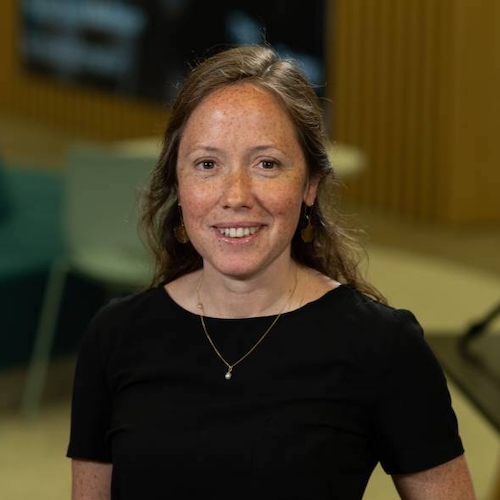
Alexandra is Senior Research Community Manager for BridgeAI at The Alan Turing Institute, where she supports UK organisations, particularly SMEs, to adopt and benefit from AI. She joined the Institute in 2023 as Research Project Manager for The Turing Way, where she supported the launch of the Practitioners Hub and contributed to the project professionalising infrastructure and research roles in data science.
Before moving into research, Alexandra led as CEO of a 250-staff theatre production company and subsequently managed research projects on mental health and wellbeing across the UK and Global South. She has also founded an award-winning SME in London. This breadth of experience, spanning community building, organisational leadership, and research practice, informs her approach to cooperative development.
She is also a mentor for Laboratoria+, supporting the professional leadership of women across Latin America.
(they/them)
Core team
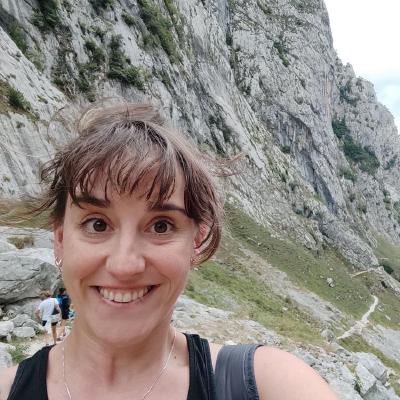
Danny is a neuroscientist and meta-scientist, who splits their time between researching colour vision and trying to make academia more accessible, more efficient, and happier. They currently use their time being the community manager for the Digital Reserch Academy, starting a housing co-op (and helping others to do the same), and thinking about how co-ops might be a useful business structure for groups of people working in (and around) research.
(she/her)
Core team
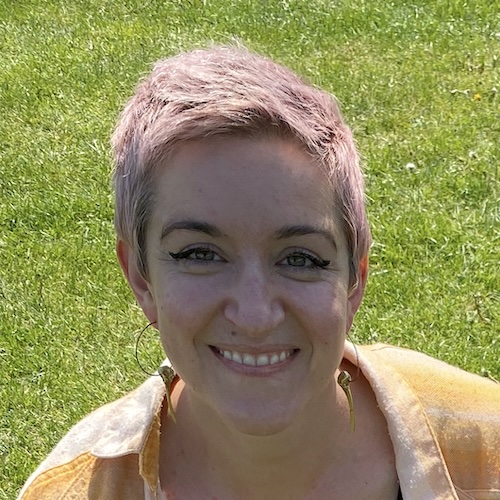
Sara is a researcher with more than 10 years of experience in experimental and computational resarch in healthcare (cancer and neuroscience genomics). She is a natural problem solver, and thrives working collaboratively and including different disciplines and actors into her and other’s research. Sara’s collaborative nature has led her to work as a Community manager for different scientific communities, like The Turing Way (shere she is part of the Community Management Working Group), DSxHE and OLS. Her love for continuous improvement drives her training work, where she is working on bringing open science skills to diverse actors and projects. Sara believes in empowering people to do what they do best, and has a special interest in introducing open leadership and training concepts to academia. Always putting people first.
(she/her)
Co-Founder / Executive Director
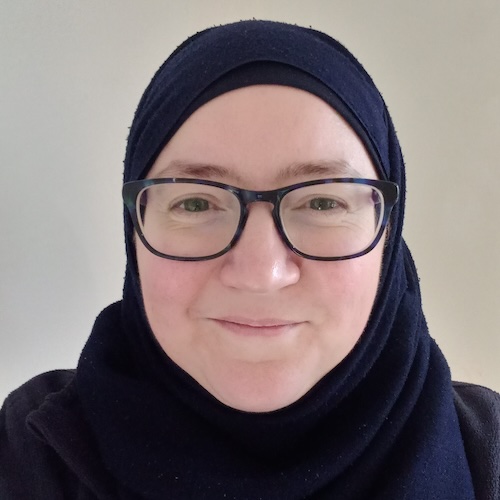
Cass has a PhD in Neuroscience (2014) and 5 years experience building data science communities across a broad range of sectors at the Alan Turing Institute and University of Oxford, with a particular focus on embedding open research practices. With both qualitative and quantitative research expertise, she is a skilled analyst, strategist and creative problem solver. She aims for maximum transparency and reproducibility in her work, and prioritises inclusive and joyful participation. She is a contributor to The Turing Way, an inaugural participant of the Wellcome Trust Success on the Board programme, and Co-Founder of Open Research Calendar.
(she/her)
Co-Founder
Emma is a Principal Researcher at the Alan Turing Institute, leading the Research Community Management team. She applies her open research and community-building expertise to a range of projects in health and biomedical sectors, and The Turing Way. She also leads initiatives focused on professionalizing data science roles and advancing biomedical data science careers. Emma has a PhD in Archaeobotany, a Software Sustainability Institute Fellow and a FAIR Data Stewardship Training Fellow, dedicated to promoting accessible, inclusive, and open scholarship practices in research.
(she/her)
Co-Founder
Malvika is an open source/science practitioner, educator and leader with a background in life sciences and bioinformatics. Previously, she held research and leadership roles at The Alan Turing Institute and European Molecular Biology Laboratory, where she led and scaled data science and bioinformatics community initiatives, notably The Turing Way and EMBL’s Bio-IT. Malvika co-founded Open Life Science (OLS), an international training, mentoring and capacity builiding organisation, before co-founding RCM Cooperative to mobilise and connect Research Community Managers from across organisations.
She has advised initiatives like NASA Open Science, the Society of RSE, Open Bioinformatics Foundation and Data Science Without Borders. Malvika is a Mozilla Open Leaders Fellow, Software Sustainability Institute Fellow, and was named among the 100 Brilliant Women in AI Ethics (2024) and INvolve Empower Top 100 Future Leaders (2025). A lifelong learner, Malvika is dedicated to improving open research, community building, collaboration, governance, and ethical practices in data science and AI.